
January 30, 2026

You’ve got a flat roof in Salem that’s aging fast—and you’re wondering if it needs a patch, a replacement, or a total system overhaul.
You’re not alone.
As a commercial roofing contractor, I get it. You’ve got warehouses, multifamily buildings, or Class B office space depending on a leak-free, dry roof during Oregon’s nine-month rainy marathon.
What keeps property managers up at night around here usually falls into three buckets:
If you own—or manage—a commercial property in Salem, Eugene, or anywhere up and down I-5, you already know the weather here plays rough with flat roofing systems.
You're dealing with:
That’s not just annoying—it’s devouring service life, causing blisters, membrane splits, and trapped moisture in insulation.
Because of this, any good commercial roofing contractor in Salem needs to do more than toss on a new membrane.
They need deep knowledge of Oregon code, moisture behavior, insulation R-value requirements, and most importantly—how to keep water off and away from your roof for 20+ years.
Quick takeaway: Our climate demands flat roof systems that resist ponding, reflect summer heat, drain well, and stay tight around penetrations.
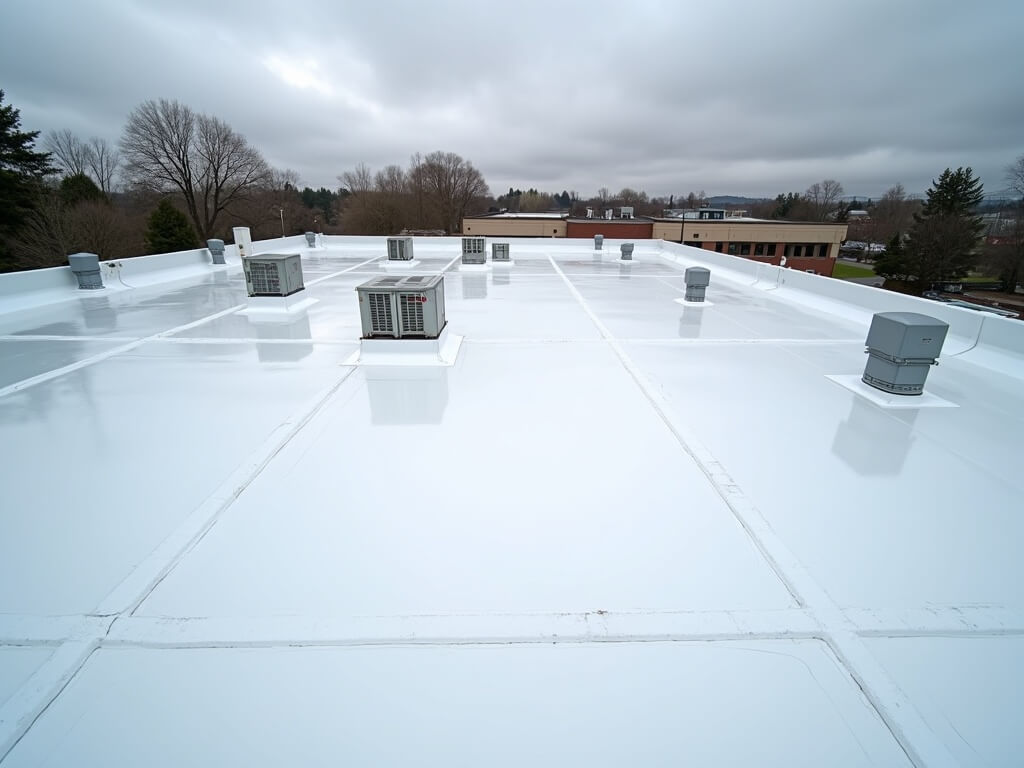
Let’s get into what actually goes on top of your roof.
We’re mostly talking about single-ply membrane systems. These are flexible sheets—usually 45 to 80 mil thick—rolled out and either welded, glued, or fastened to the insulation layer underneath.
Decades of experience show that three stand out in the Pacific Northwest:
Real talk: I helped re-roof a clinic in Salem's commercial corridor where the old BUR roof failed due to HVAC leaks and UV cracking. We replaced it with a fully adhered PVC system, reinforced flashings around 12 penetrations, and after last winter’s rains—zero leaks, zero callbacks. That's a win.
Heads up: TPO’s value is undeniable—but membrane thickness, weld quality, and experienced installers absolutely matter. Not all brands perform the same after 5+ years.
Bottom line: It’s reliable, simple, and works wonders on old-school low-slope roofs, as long as drains are top-notch.
You’ll still run into classic systems like built-up roofing (BUR) and modified bitumen in Salem.
Modified bitumen is like BUR’s modern cousin. It’s rolled asphalt sheets with additives that improve UV and flex performance. SBS or APP modifiers make the surface more durable—especially for foot traffic.
Older BUR systems (think tar and gravel from the 1970s) can perform decently… until they don’t. If you’re managing a building with a BUR roof that’s past 20 years, it’s probably a good idea to do a core sample and see what’s happening underneath.
Now metal roofing?
Just make sure flashings and penetrations are dialed in. Sheet metal work is an art—and it shows after the storm hits.
Quick takeaway: Salem’s commercial buildings often mix and match—metal over office wings, single-ply over low-slope warehouse sections. Don’t assume it’s one-size-fits-all.
This is where it gets interesting.
If your existing flat roof is structurally sound—but aging, discolored, and developing minor leaks—a professionally applied coating system might buy you another 10–15 years.
You’ve got options:
The trick here is prep.
The surface must be clean, dry, and stable. No coating system will cure a rotting deck or layers of wet insulation.
We do a ton of these restorations on top of aging TPO or EPDM systems. Instead of a full tear-off, we pressure wash, repair seams, replace patchy flashings, and apply a full liquid membrane over the top.
Key benefit: You’re not sending dumpsters of old roofing to the landfill. And you minimize tenant disruption, too.
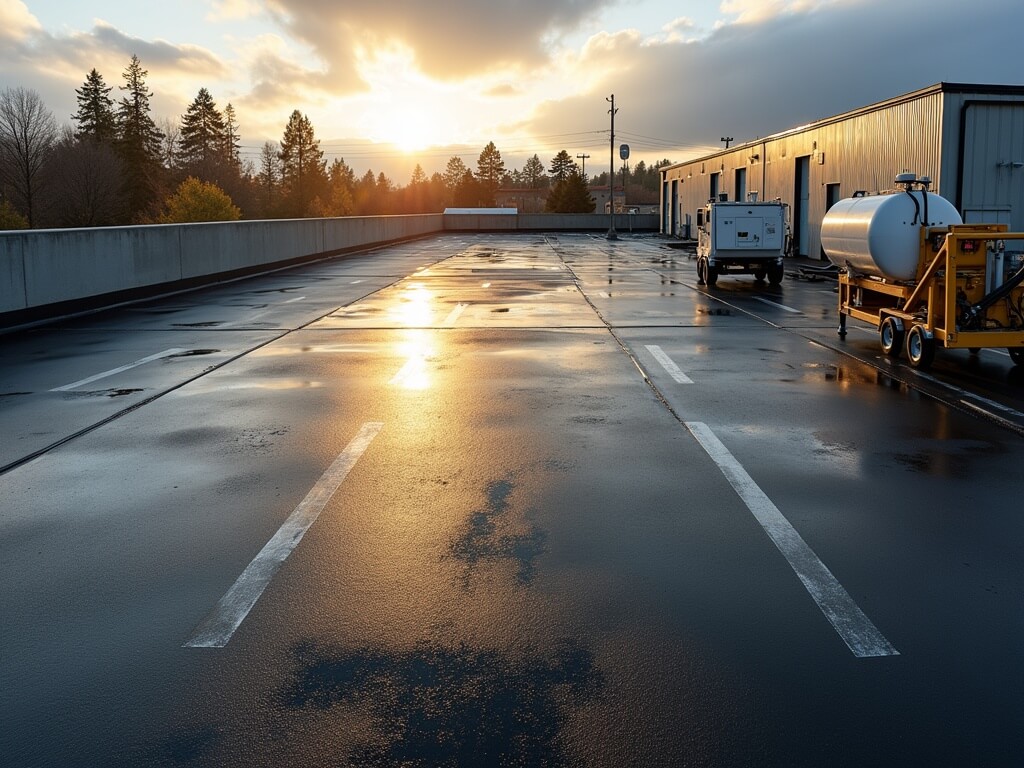
Flat roofing is only as strong as each piece of the system—and how well they work together.
If even one layer fails (especially around drains or penetrations), that’s game over.
Here’s what goes into a high-performance flat roof in Oregon:
Quick takeaway: Flashings and drainage make or break a flat roof’s lifespan. Membrane choice matters—but they’ll all fail fast without solid system integration.
Next up, we’ll cover how to actually pick the "best" roofing system for your specific Salem building—and what a smart commercial roofing contractor will tell you during that first visit (even if you’re not ready to sign anything yet)...
Let’s skip the sales fluff and talk real strategy.
Choosing the “best” roofing system in Salem doesn’t mean buying the most expensive one.
It means matching the system to your specific:
I always tell clients: a perfectly-installed TPO might outperform a poorly detailed PVC any day. Don’t get caught up in brand-name worship without first understanding your building’s needs.
Break it down with me:
If you’re managing a strip mall with multiple HVAC units on the roof?
PVC is probably a better pick. It resists grease and chemicals from exhaust vents and has heat-welded seams that lock water out tight.
Running a warehouse that’s 40,000 square feet with limited foot traffic?
EPDM might be your budget friend. Simple install, long life—but you’ll want reflective coating and meticulous drainage checks.
Operating a medical building with backed-up downspouts last winter?
Maybe it’s time to talk about full tapered insulation, custom scuppers, and large front drains—regardless of membrane type.
One client, a property manager off Mission Street in Salem, called after years of patching EPDM bubbles. We ran thermal imaging, found soaked insulation, and realized the roof had zero taper. That’s why the leaks kept coming back.
We helped them re-roof with TPO, over new tapered polyiso, plus added two new scuppers. It hasn’t leaked since. The tenants noticed the difference right away.
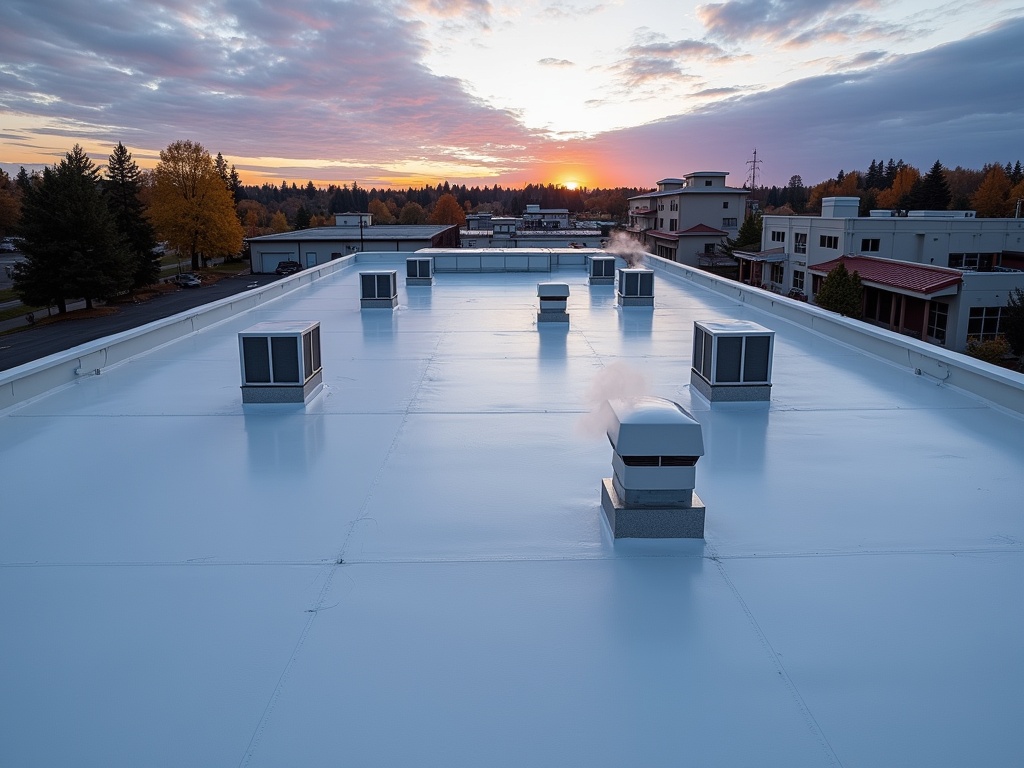
Key takeaway: Your building tells you what kind of roof it needs—if you listen carefully and think long-game.
Plenty of Salem-area contractors will promise the world for the lowest bid.
But after you’ve rebuilt a few botched roofs, you start noticing patterns.
The best commercial roofing crews?
And above all: they know how to deal with Oregon weather.
We’ve walked sites after 3 contractors recommended coating roofs that were waterlogged underneath. That’s a recipe for trapped moisture, mold, and total membrane failure.
Avoid the traps:
If your contractor brings a drone, an infrared scanner, and a moisture reader on the first walk-through?
That’s someone who’s here to solve, not sell.
Quick checklist:
Smart hires save money through performance—not just install price.
What’s the number one reason commercial roofs in Salem fail prematurely?
Neglect.
A good membrane with bad upkeep equals trouble.
Every commercial flat roof should have a proactive maintenance plan. Here’s what that looks like:
I can’t count how many properties we’ve serviced where a $200 cleaning would’ve avoided a $6K intrusion repair.
For multi-site managers, this matters double.
We help our clients build roof asset plans: evaluations across all buildings, schedules for projected end-of-life, and clear budget timelines. It brings clarity, not surprises.
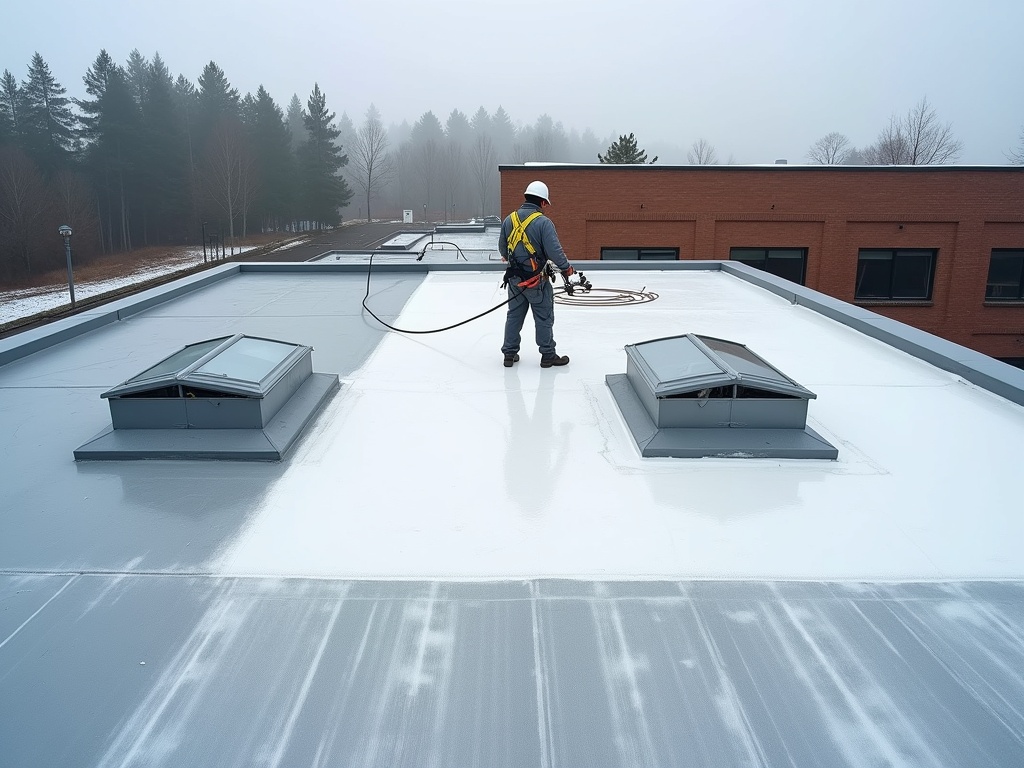
Especially on flat roofs around Salem with moss, trees, or rooftop HVACs—scheduled maintenance is the best insurance plan you’ve got.
Bottom line: Don’t wait for the leak to call someone. By then, it’s already $10,000 too late.
Let’s stare into the future a bit.
Oregon has been hot on green and high-performance building movements for years. And commercial roofs are becoming platforms—not just coverings.
On the forefront:
We’ve done several TPO installations prepped for solar—meaning extra protection under mounting brackets, upgraded fasteners, and longer warranties to match panel service life.
It matters.
Because retrofitting it after the fact usually costs more—and doesn’t last as long.
Want your roof to do more than keep water out?
Make sure your contractor knows how to coordinate with solar vendors, mechanical pros, and energy consultants.
We’ve done that dance. It saves headaches later.
Key trends to watch:
Today’s roof is tomorrow’s real estate platform. Build accordingly.
How long should this last?
Can I install over the old roof?
What’s the best system for my building?
Do I need permits?
How much will it cost?
We’ve got a budget deadline. How fast can it be done?
At the end of the day, your roof’s not just protecting your HVAC.
It’s protecting your tenants, your business reputation, and your bottom line.
The key is matching the system to your building’s exact needs—then hiring a contractor who knows what a decade of Oregon weather will really do to it.
Smart materials, strategic drainage design, full flashing integration, and trustworthy install crews make the difference.
If you’re in Salem—or anywhere in the Willamette Valley—and need roofing help, do it right the first time.
That’s what we do every day.
Want a commercial roofing contractor in Salem, Oregon you can trust? Call us at (541) 981-2190 or visit us at 4505 Marion’s St SE Albany, OR.
We’re here when you need us—and your building deserves it.
Call us before that next storm rolls through.
Because the right roof isn’t a cost. It’s your building’s best investment.
And we’re the commercial roofing contractor in Salem, Oregon who treats it that way.


