Driveways
Address settled panels, uneven transitions and areas that may be directing water poorly.

Concrete lifting uses carefully placed material beneath a settled slab to fill voids and raise the surface. Orezona evaluates driveways, sidewalks, patios, steps and other slabs throughout Oregon’s Willamette Valley.
When soil consolidates, washes away or no longer supports a slab evenly, part of the concrete can settle. Foam lifting addresses the space below rather than immediately removing the entire slab.
Small access holes are drilled in planned locations. Expanding polyurethane material is introduced beneath the concrete, where it fills voids and applies controlled lifting pressure. The goal is improved support and elevation—not a promise that every slab can be returned to a perfectly new condition.
The condition of the concrete matters as much as the amount of settlement. Orezona assesses each slab before recommending lifting or replacement.
Address settled panels, uneven transitions and areas that may be directing water poorly.
Reduce abrupt elevation changes that can interfere with safer, more comfortable access.
Improve the usability of slabs affected by settlement, rocking furniture or unwanted drainage.
Evaluate supported concrete sections that have pulled away or shifted at an entry.
Plan repairs for customer, tenant and employee routes with minimal unnecessary demolition.
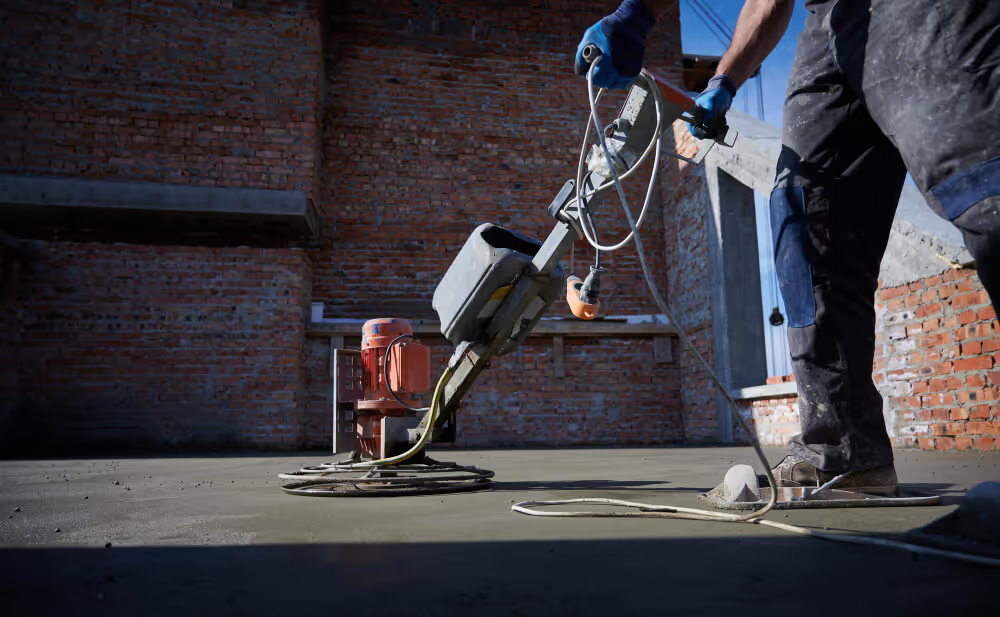
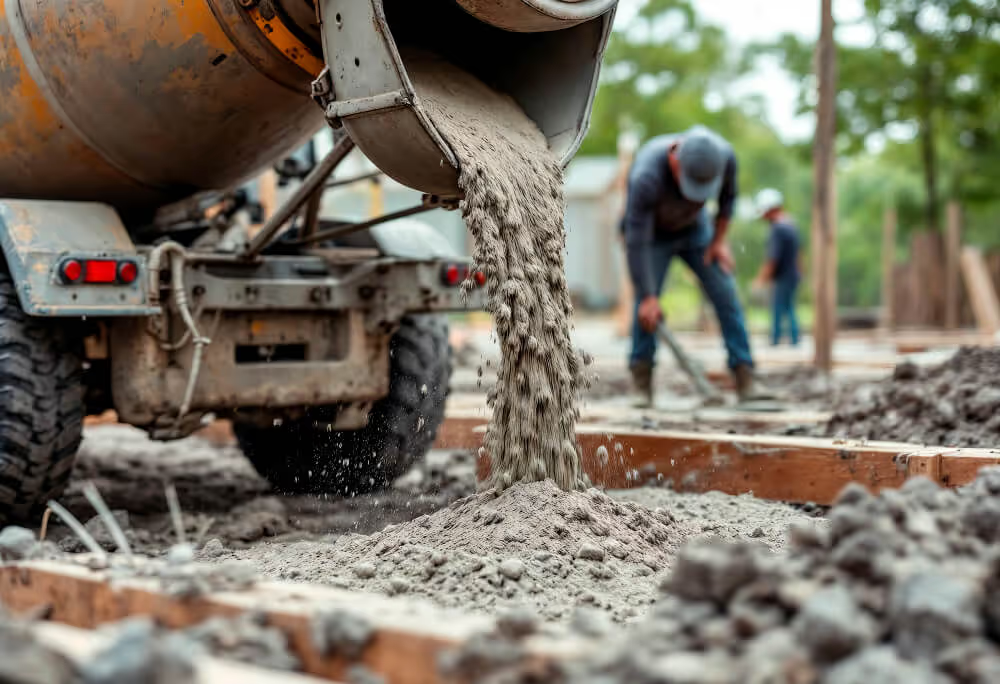
Concrete lifting is a strong option in the right circumstances, but it cannot repair every form of concrete damage. The assessment helps separate settlement from slab failure.
A settled slab may remain a candidate when the concrete can move as a usable section and the site allows proper injection.
Severely deteriorated concrete may not respond well to lifting, even if settlement is part of the problem.
This introduction stays in place on desktop while the process cards move beside it. On smaller screens, everything stacks naturally for easy reading.
Schedule an evaluationWe review settlement, cracks, adjoining surfaces, drainage, access and the way the concrete needs to move.
Injection locations are mapped around the slab’s size, condition and relationship to nearby structures.
Holes are placed through the concrete so lifting material can reach voids beneath the slab.
Polyurethane material is introduced in controlled stages while the slab’s movement and adjacent elevations are monitored.
Access points are patched, the treated area is reviewed and the property is left orderly with appropriate use guidance.
Choose your city for location-specific information, or use this page for the complete overview of Orezona’s concrete lifting service.
Final suitability, timing and results depend on the slab and site. These answers provide a useful starting point before an assessment.
Explore all service areasSettlement can follow soil consolidation, erosion, poor compaction, water movement or changes around the slab. An evaluation considers both the visible concrete and conditions that may have reduced support beneath it.
Sometimes. Limited cracks do not automatically rule out lifting, but badly fragmented or structurally failed concrete may be better suited to replacement. Existing cracks can remain visible after the slab is raised.
Lifting improves support and elevation; it does not resurface aged concrete or erase stains, spalling and existing cracks. The expected functional and visual result should be discussed before work begins.
Timing depends on the number, size and accessibility of the slabs, the amount of correction and how the concrete responds. Orezona can provide project-specific expectations after evaluating the site.
It can reduce demolition and replacement work when the slab is a good candidate, but pricing depends on the project. The right comparison includes slab condition, access, required elevation and any related drainage or concrete repairs.
Changing slab elevation may improve certain drainage patterns, but results depend on surrounding grades, downspouts, soil and nearby structures. Drainage goals should be identified during the evaluation.
Find out whether lifting is a practical alternative to removing and replacing your slab.
An honest assessment means we’re not here to sell you something you don’t need. We’ll inspect your roof and give you a clear, detailed report of its condition. If a simple repair can buy you time, we’ll say so. If replacement is needed, we’ll walk you through your options and help you plan for it. No pressure, no scare tactics—just real answers you can trust.

